Municipal automated collection in the City of Houston limits organic debris placement to specific monthly dates, leaving fallen limbs, unbundled brush, and heavy root balls sitting on curbs for weeks at a time.…
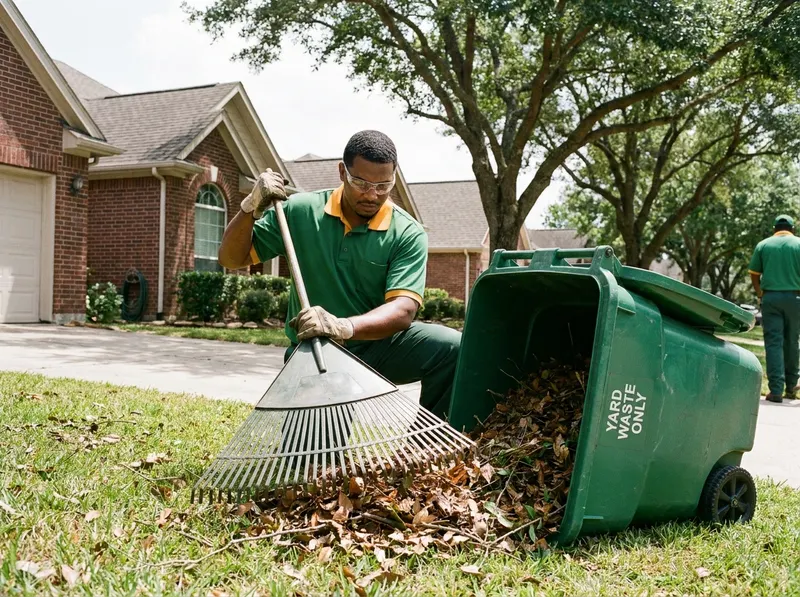
Municipal automated collection in the City of Houston limits organic debris placement to specific monthly dates, leaving fallen limbs, unbundled brush, and heavy root balls sitting on curbs for weeks at a time. Residential landscaping projects in neighborhoods like Garden Oaks, The Heights, and Meyerland frequently generate green waste volumes exceeding city bulk-trash limits of 8 cubic yards. Routine pruning or post-storm clearing along bayou-adjacent properties produces dense, high-moisture organic material that rots quickly in the subtropical Texas humidity, creating perimeter pest shelters if unaddressed. Dedicated private yard waste hauling bypasses city routing calendars to clear access driveways and alleys immediately after crews finish pruning.
The volume and moisture density of organic debris dictate disposal logistics. If a property in Kingwood or Memorial yields loose, light debris like bag-clipped turf, a standard 10-yard volume clearing suffices; if clearing large hardwood branches or thick pine segments in West University Place or River Oaks, weight increases significantly. Hardwood debris like Live Oak and Pecan approaches 2,000 to 3,000 pounds per cord when green. Roll-off containers and removal vehicles utilize ground-cushioning wooden shoring under all hydraulic stabilizers to protect finished residential concrete, stamped brick pavers, and asphalt driveways from point-load cracking. All-inclusive tonnage allowances prevent surprise surcharges that often occur when moisture-laden green material hits transfer facility scales.
Disposal requirements require separating raw organic material from general municipal solid waste. Unlike standard municipal garbage processing, collected brush and tree refuse bypass general landfills to enter regional composting facilities that convert wood into commercial mulch and organic topsoil additives. Contractors and homeowners operating near urban sites in EaDo or coastal zones in Clear Lake avoid blending treated fencing timber, concrete landscaping borders, or plastic nursery pots with organic piles, as contaminated loads are rerouted to transfer stations and incur mixed-load solid waste disposal fees. Clearing vegetation through dedicated organic routes keeps organic debris productive and ensures Harris County sites remain clear.
Every job gets a firm, written price after a free on-site visit.
Tell us about your yard waste collection job in Houston and we'll send a clear, written quote, usually the same day.
 Green Ridge Dumpster Rental