Gulf Coast weather cycles frequently leave Houston properties covered under thousands of pounds of heavy wet timber, scattered roof shingles, and disintegrated pine fencing. In established neighborhoods like Memorial,…
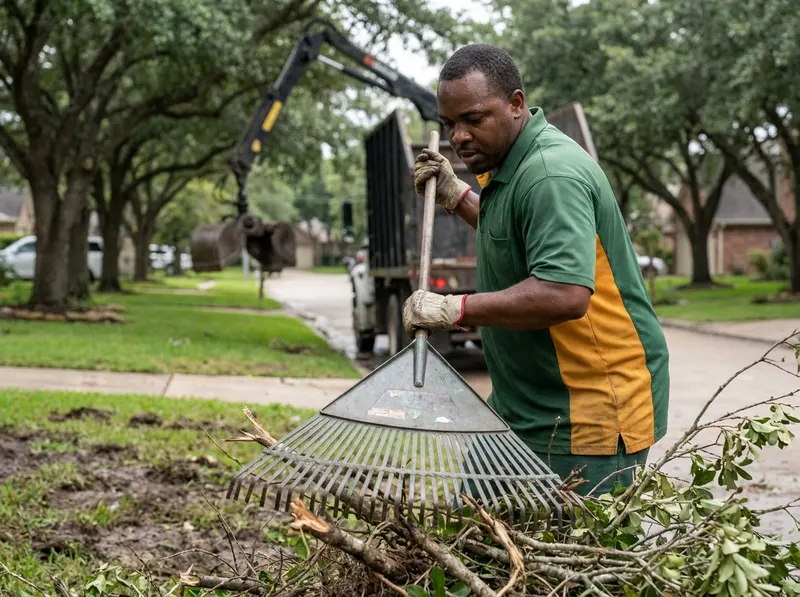
Gulf Coast weather cycles frequently leave Houston properties covered under thousands of pounds of heavy wet timber, scattered roof shingles, and disintegrated pine fencing. In established neighborhoods like Memorial, Kingwood, and The Heights, massive live oaks and towering loblolly pines frequently lose heavy limbs that block secondary egress lanes, crush metal carports, and tear out residential utility lines. Clearing these heavy loads demands immediate physical intervention before warm subtropical moisture triggers mold growth on soaked structural materials or wood-boring pests infest storm-tossed brush piles. The service deploys dedicated protective timber tracks beneath heavy hauler wheels to shield residential concrete, stamped pavers, and historical brick driveways from cracking under heavy gross vehicle weight.
Selecting a dedicated storm debris removal crew differs significantly from standard municipal bulk trash collections managed by the City of Houston Solid Waste Management Department. City bulk pickups operate on strict monthly routing schedules that frequently leave rotting piles sitting curbside along avenues in Montrose, Meyerland, and Garden Oaks for weeks, exposing grass lawns to root dieback and municipal ordinance fines. While waiting for public curbside equipment carries no direct utility charge, private removal delivers rapid site clearance within hours of property clearance. The primary trade-off centers on upfront service allocation versus extended neighborhood clutter, driveway obstructions, and grass damage caused by long-term debris suffocation.
Water-damaged interiors across low-lying flood regions like Clear Lake, EaDo, and West University Place create distinctly heavy composite loads requiring careful weight calculations. Water-logged gypsum drywall weighs approximately 2.5 to 3 times its dry standard mass, transforming a moderate interior gutting project into multi-ton refuse that quickly exceeds standard trailer limits. To prevent unexpected landfill penalty fees, loads are calculated through clear, upfront weight tiers grounded in physical volume and material density. Technicians stage sorting zones directly on-site to divide organic green waste bound for regional compost facilities from non-recyclable construction debris headed directly to permitted Harris County landfills.
Preparing a property for systematic storm cleanout involves three practical operational steps. First, disconnected fence panels, heavy tree branches, and ruined interior carpet must be separated from standing power lines; local energy utilities must confirm all downed electric wires are completely deactivated before any ground clearance begins. Second, site access paths along driveways or alleyways must be cleared of parked vehicles to provide an uninterrupted 10-foot lateral staging berth. Third, technicians place protective timber dunnage beneath hauling machinery before loading heavy tree trunks and water-soaked building refuse, securing property surfaces while eliminating trip hazards immediately.
Every job gets a firm, written price after a free on-site visit.
Tell us about your storm debris cleanout service job in Houston and we'll send a clear, written quote, usually the same day.
 Green Ridge Dumpster Rental