Curbside solid waste management removes the physical strain of accumulating junk by placing a stable container directly along your street frontage or private driveway apron. In historic neighborhoods like The Heights,…
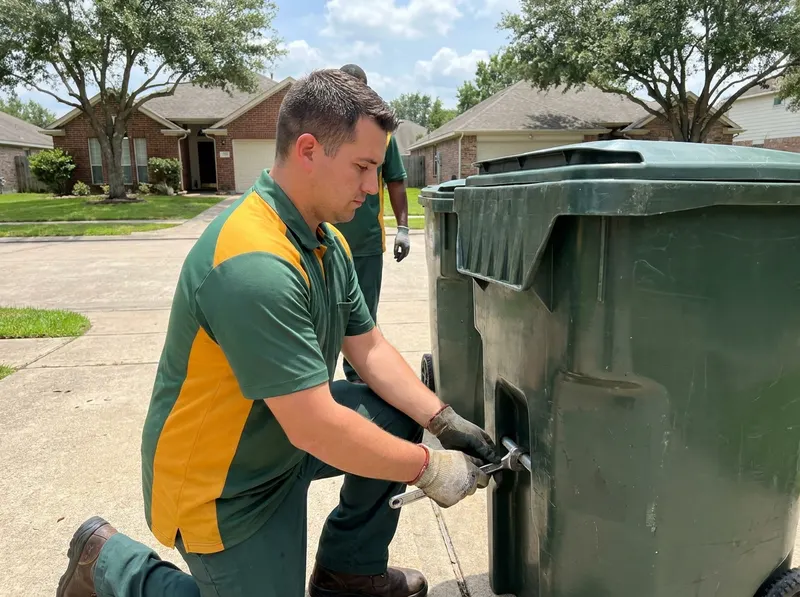
Curbside solid waste management removes the physical strain of accumulating junk by placing a stable container directly along your street frontage or private driveway apron. In historic neighborhoods like The Heights, Montrose, and Garden Oaks, narrow shared drives and low-hanging tree canopies make bulky waste storage challenging. Staging waste in designated curbside roll-offs or heavy-duty totes keeps access lanes open for vehicles and prevents loose debris from washing down storm drains into Buffalo Bayou during heavy Gulf Coast downpours. Every container drop utilizes wooden surface-protection boards under steel wheels to distribute point loads and safeguard decorative pavers, asphalt, or finished concrete from cracking under heavy weight.
Selecting the right staging container depends on material density and space restrictions. A 10-yard container holds roughly 50 to 60 standard 33-gallon contractor trash bags, making it suitable for single-room remodels in West University Place or garage decluttering in Meyerland. Larger residential tear-offs and whole-home renovations in Memorial and River Oaks require 20-yard or 30-yard open-top units that hold up to 120 bags. While smaller containers minimize curb footprint and satisfy strict neighborhood association rules, larger footprints eliminate the risk of overtopping containers past water-level height lines. Curbside container staging differs from hands-on junk removal because the customer controls loading pace over a multi-day window rather than coordinating a rapid two-hour loading crew.
Proper site management requires adhering to City of Houston and Harris County waste regulations. Under local solid waste enforcement codes, municipal transfer facilities reject sealed containers holding wet paints, liquid chemicals, lead-acid vehicle batteries, and intact HVAC compressors containing freon. When undertaking structural remodeling near commercial corridors in EaDo or outer residential lots in Clear Lake and Kingwood, heavy dense masonry materials like brick, concrete chunks, and wet dirt must remain separated to stay beneath legal axle weight maximums. Scheduling delivery requires identifying a level drop surface with at least 14 feet of overhead clearance, ensuring roll-off hoist trucks maneuver safely beneath overhead utility wires.
Every job gets a firm, written price after a free on-site visit.
Tell us about your curbside solid waste management job in Houston and we'll send a clear, written quote, usually the same day.
 Green Ridge Dumpster Rental